What Is Agentic AI? How It Works and Why It’s the Future in 2026
Introduction
Artificial intelligence is evolving faster than ever, and Agentic AI in 2026 has become one of the most important developments in the technology industry. Unlike traditional AI systems that simply respond to commands, Agentic AI can understand goals, create plans, make decisions, use digital tools, and complete complex tasks with minimal human guidance.
This shift is changing how businesses operate, how developers build software, and how individuals manage everyday work. From writing reports and analyzing data to scheduling meetings and coordinating multiple software platforms, intelligent AI systems are becoming capable digital assistants rather than simple chatbots.
Recent advances in large language models, cloud computing, reasoning capabilities, and workflow automation have made this new generation of AI more practical than ever. Organizations across healthcare, finance, education, manufacturing, and customer service are already experimenting with AI agents that can independently perform tasks once handled by humans.
However, Agentic AI is more than another technology trend. It represents a major step toward AI systems that can reason, plan, remember, and adapt while working toward clearly defined objectives. As businesses continue investing in automation and productivity, understanding how Agentic AI works has become valuable for professionals, students, entrepreneurs, and technology enthusiasts alike.
In this comprehensive guide, you’ll learn what Agentic AI is, how it works, how it differs from traditional and generative AI, where it’s being used today, and why many experts believe it will shape the future of artificial intelligence over the coming years.

What Is Agentic AI?
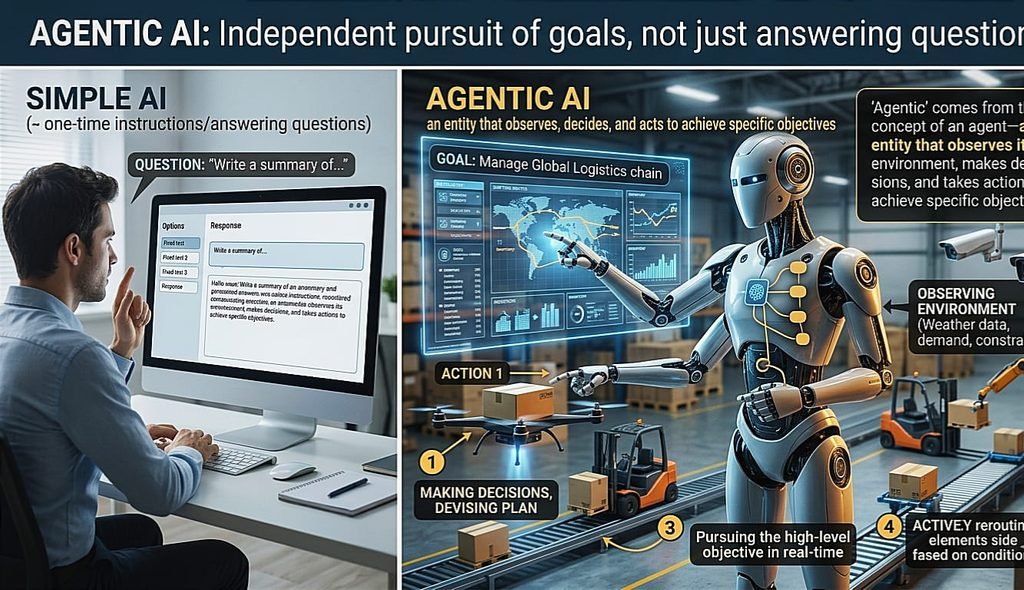
Agentic AI refers to artificial intelligence systems designed to act as independent agents capable of pursuing goals instead of simply answering questions or following one-time instructions.
The word “agentic” comes from the concept of an agent—an entity that observes its environment, makes decisions, and takes actions to achieve specific objectives.
Instead of waiting for every instruction, Agentic AI can:
• Understand a goal
• Break it into smaller tasks
• Create a strategy
• Execute multiple actions
• Monitor progress
• Adjust when conditions change
• Deliver results
Think of the difference this way:
A traditional chatbot works like a calculator—you ask, it answers.
An AI agent works like a capable assistant—you assign a project, and it figures out how to complete it.
A Simple Real-World Example:
Imagine you ask an AI system.
”Plan my business trip to New York next month within a $2,000 budget.”
A traditional AI might provide travel suggestions or links.
An Agentic AI system could:
- Compare flight prices.
• Search hotel options.
• Review your calendar.
• Schedule meetings.
• Reserve transportation.
• Prepare an itinerary.
• Estimate expenses.
• Notify you if prices change.
Rather than producing one response, it performs a coordinated sequence of actions to achieve the desired outcome.
Why Agentic AI Is Trending in 2026
Several technological breakthroughs have made Agentic AI practical at scale.
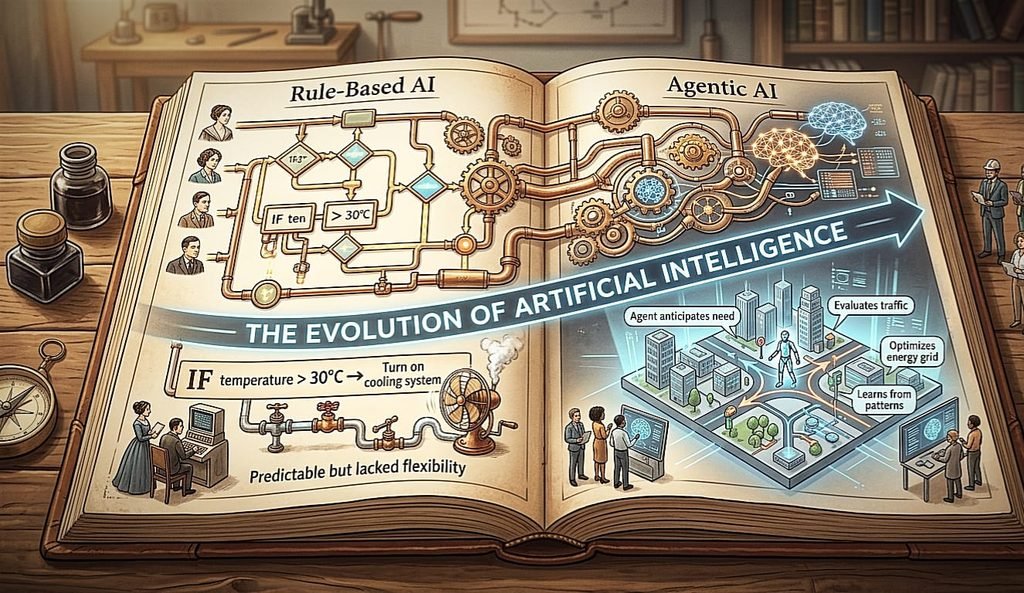
The Evolution of Artificial Intelligence
Agentic AI didn’t appear overnight. It represents the latest step in decades of AI research and development.
Rule-Based AI:
The earliest AI systems followed predefined rules created by human programmers.
These systems performed well only when every possible scenario had already been anticipated.
For example:
IF temperature > 30°C → Turn on cooling system.
They were predictable but lacked flexibility.
Machine Learning:
Machine learning allowed computers to identify patterns from data rather than relying entirely on manually written rules.
Instead of programming every decision, developers trained algorithms using historical information.
Machine learning significantly improved applications such as:
• Email spam detection
• Product recommendations
• Fraud detection
• Image recognition
However, these systems still focused on specific tasks.
Deep Learning:
Deep learning introduced neural networks capable of processing enormous datasets.
This breakthrough dramatically improved:
• Speech recognition
• Computer vision
• Language translation
• Medical imaging
• Autonomous driving
Deep learning models became increasingly accurate but generally required substantial computing resources and large amounts of training data.
Generative AI:
Generative AI marked another major milestone.
Rather than only recognizing patterns, these systems could generate new content, including:
• Text
• Images
• Code
• Music
• Videos
Applications such as ChatGPT demonstrated how AI could assist with writing, coding, research, brainstorming, and creative tasks.
Despite these impressive capabilities, most generative AI systems remained reactive—they produced outputs based on prompts but rarely managed long-term objectives independently.
Agentic AI:
Agentic AI builds on all previous advancements while introducing autonomy.
Instead of simply generating content, it can:
• Set priorities
• Create plans
• Use external software
• Interact with APIs
• Evaluate outcomes
• Learn from feedback
• Continue working until a goal is achieved
This makes Agentic AI the next logical step in the evolution of artificial intelligence.
How Agentic AI Works:
Understanding how Agentic AI works is easier when you view it as a structured workflow rather than a single action.
You May Also Like
Looking for something to watch after exploring the future of AI? Check out our list of the [Top 5 Movies of 2025 You Must Watch] and discover some of the year’s most talked-about movies.
Step 1: Goal Understanding
Everything begins with a clear objective.
For example:
”Analyze our website traffic and identify opportunities to increase conversions.”
The AI first interprets what success looks like.

Step 2: Planning
Instead of acting immediately, the system develops a plan.
It may decide to:
• Collect analytics data
• Compare historical trends
• Identify high-performing pages
• Detect user drop-off points
• Generate recommendations
Planning allows the AI to organize tasks logically before execution.
Step 3: Decision Making
As the workflow progresses, new information becomes available.
Rather than blindly following its original plan, Agentic AI continuously evaluates new data and chooses the most effective next action.
This adaptive decision-making makes AI agents far more flexible than traditional automation software.
Step 4: Tool Usage
Modern AI agents rarely work alone.
They interact with:
• Web browsers
• Databases
• APIs
• Email platforms
• CRMs
• Project management software
• Cloud storage
• Analytics dashboards
This ability dramatically expands what AI systems can accomplish.
Step 5: Execution
Once planning is complete, the AI performs each task while monitoring progress.
If an obstacle appears, it can revise its strategy instead of immediately stopping.
Step 6: Evaluation
After completing the workflow, the system compares results against the original objective.
Questions it may evaluate include:
• Was the goal achieved?
• Were resources used efficiently?
• Could another strategy perform better?
Step 7: Continuous Improvement
One of the defining characteristics of Agentic AI is its ability to improve future performance.
Using feedback from previous tasks, AI agents gradually refine their planning, reasoning, and decision-making processes, leading to more efficient outcomes over time.
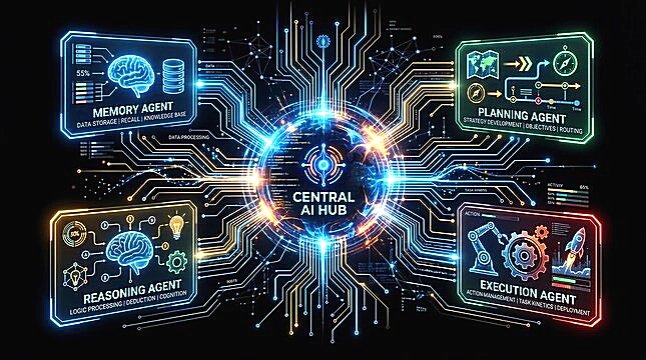
Core Components of Agentic AI
Every advanced AI agent combines several essential capabilities that work together to complete complex tasks.
Types of Agentic AI
Not all AI agents operate in the same way. Depending on their capabilities and objectives, they can be grouped into several categories.
Reactive Agents:
Reactive agents are the simplest form of AI agents. They respond only to the current situation without remembering previous events or planning for the future.
For example, a chess program that evaluates the current board position and selects the best move without considering past games is a reactive agent.
These systems are fast and efficient for specific tasks but are limited when solving complex, multi-step problems.
Best For:
• Simple automation
• Games
• Basic monitoring systems
• Real-time decision making
Model-Based Agents:
Model-based agents maintain an internal representation of their environment. This allows them to make better decisions by considering information that may not be immediately visible.
For example, a warehouse robot can remember the layout of the building, identify blocked pathways, and choose an alternative route without waiting for human instructions.
Because they understand context, model-based agents are more adaptable than reactive systems.
Goal-Based Agents:
Goal-based agents focus on achieving a specific objective rather than simply reacting to events.
Suppose a business asks an AI agent to reduce customer support response times. Instead of answering only individual questions, the agent may:
• Analyze support tickets.
• Identify common issues.
• Suggest workflow improvements.
• Automate repetitive responses.
• Monitor performance metrics.
Every action is guided by the overall goal.
Utility-Based Agents:
Sometimes there are multiple ways to achieve the same objective. Utility-based agents evaluate different options and choose the one that provides the greatest overall benefit.
For example, when planning business travel, an AI agent may compare:
• Cost
• Travel time
• Airline reliability
• Hotel ratings
• Meeting schedules
Rather than optimizing a single factor, it balances multiple priorities to produce the best overall outcome.
Learning Agents:
Learning agents represent the most advanced category of Agentic AI. They improve their performance through experience, feedback, and continuous refinement.
These systems are widely used in:
• Personalized education
• Recommendation engines
• Fraud detection
• Healthcare diagnostics
• Autonomous robotics
Their ability to adapt makes them particularly valuable in environments where conditions change frequently.
Real-World Applications of Agentic AI
The practical value of Agentic AI becomes clear when we look at how it is already being used across industries.
Healthcare:
Healthcare organizations are adopting AI agents to reduce administrative workloads and improve patient care. An AI agent can schedule appointments, summarize medical records, assist with documentation, and help doctors access relevant clinical information more quickly.
Researchers are also exploring AI agents that support medical imaging analysis, personalized treatment planning, and drug discovery while keeping healthcare professionals in control of final decisions.
Education:
Educational institutions are using Agentic AI to create more personalized learning experiences.
Instead of providing the same lessons to every student, AI agents can monitor progress, identify learning gaps, recommend study materials, and generate customized practice exercises based on individual needs.
Teachers also benefit by automating grading, lesson planning, and administrative tasks.
Finance and Banking:
Banks process enormous volumes of transactions every day.
AI agents help detect fraudulent activity, monitor compliance requirements, analyze financial risks, generate investment insights, and automate customer support.
Because these systems can evaluate multiple data sources simultaneously, they often identify unusual patterns faster than traditional software.
Marketing and Digital Advertising:
Marketing teams increasingly rely on AI agents to manage campaigns across multiple channels.
An AI agent can:
Analyze customer behavior.
• Create audience segments.
• Optimize advertising budgets.
• Generate marketing content.
• Measure campaign performance.
• Recommend improvements.
This enables marketers to focus more on strategy while repetitive tasks are handled automatically.
E-commerce:
Online retailers use AI agents to improve shopping experiences and streamline operations.
For example, an AI agent can recommend products based on browsing history, monitor inventory levels, forecast demand, update pricing, and respond to customer questions in real time.
These capabilities help businesses increase sales while improving customer satisfaction.
Manufacturing:
Manufacturers are adopting Agentic AI to optimize production processes, monitor equipment performance, and predict maintenance needs before costly breakdowns occur.
By analyzing sensor data from connected machines, AI agents can identify inefficiencies, recommend adjustments, and support quality control efforts, leading to more reliable operations and reduced downtime.
Customer Support:
Modern AI agents are transforming customer service by handling routine inquiries, guiding users through troubleshooting steps, and escalating complex cases to human representatives when necessary.
Unlike basic chatbots, Agentic AI can maintain context throughout an entire conversation, access company knowledge bases, and coordinate actions across multiple systems to resolve customer issues more efficiently.
Software Development:
Software development has become one of the fastest-growing areas for Agentic AI adoption. Modern development teams are no longer using AI only for code completion or debugging. Instead, AI agents are beginning to participate throughout the entire software development lifecycle, from gathering requirements to deployment and ongoing maintenance.
Imagine a software company planning to build a new customer relationship management (CRM) platform. Rather than waiting for developers to complete each task manually, an AI agent can analyze project requirements, break the project into smaller milestones, generate technical documentation, recommend software architecture, create boilerplate code, write unit tests, and even monitor deployment pipelines.
This collaborative approach allows developers to focus on solving complex engineering challenges while repetitive and time-consuming tasks are handled automatically.
Some development teams are also using AI agents to:
- Review pull requests.
• Detect security vulnerabilities.
• Optimize database queries.
• Generate API documentation.
• Monitor application performance.
• Recommend code improvements.
Although human developers remain responsible for reviewing and approving final changes, Agentic AI significantly reduces development time while improving software quality and consistency.
Cybersecurity
As cyber threats become increasingly sophisticated, organizations are turning to Agentic AI to strengthen their security operations.
Traditional cybersecurity tools often rely on predefined rules and signature databases. While these methods remain valuable, they may struggle to detect newly emerging attacks or complex multi-stage threats.
Agentic AI introduces a more adaptive approach.
Instead of simply monitoring network traffic, an AI agent can collect information from multiple security systems, identify unusual behavior, prioritize threats based on risk levels, recommend response strategies, and even automate certain defensive actions under carefully defined policies.
For example, if an employee account suddenly attempts to access confidential data from an unfamiliar location, an AI agent can:
- Detect the unusual activity.
• Compare it with historical user behavior.
• Evaluate potential security risks.
• Temporarily restrict account access.
• Notify the security team.
• Generate an investigation report.
By performing these actions within seconds, AI agents help organizations respond more quickly to potential attacks while reducing the workload on cybersecurity professionals.
However, human oversight remains essential because security decisions often involve legal, ethical, and operational considerations that require expert judgment.
Content Creation
Content creation has evolved dramatically over the past few years. Instead of producing individual pieces of content on demand, Agentic AI can now manage complete content workflows from initial research to publication.
Consider a technology blog that publishes several articles each week. An AI agent can begin by researching trending topics, analyzing competitor content, identifying relevant keywords, creating an editorial calendar, generating article outlines, drafting content, checking grammar, optimizing readability, and preparing social media summaries for distribution.
This workflow allows writers and editors to spend more time refining ideas, verifying information, and adding valuable insights rather than repeating routine tasks.
Businesses also use AI agents to create:
• Product descriptions.
• Email campaigns.
• Newsletters.
• Video scripts.
• Podcast outlines.
• Knowledge base articles.
• Internal documentation.
• Marketing reports.
The most successful organizations treat Agentic AI as a collaborative assistant rather than a replacement for human creativity. Editors, designers, and subject matter experts continue to review content to ensure accuracy, originality, and brand consistency.
Better Large Language Models:
Modern language models understand context, remember previous instructions, and generate increasingly accurate responses. Their stronger reasoning abilities allow AI agents to complete multi-step workflows with greater reliability.
Business Automation:
Organizations are under constant pressure to reduce repetitive work while improving productivity.
Instead of hiring additional staff for routine tasks, businesses are increasingly deploying AI agents to automate reporting, customer interactions, scheduling, document processing, and internal operations.
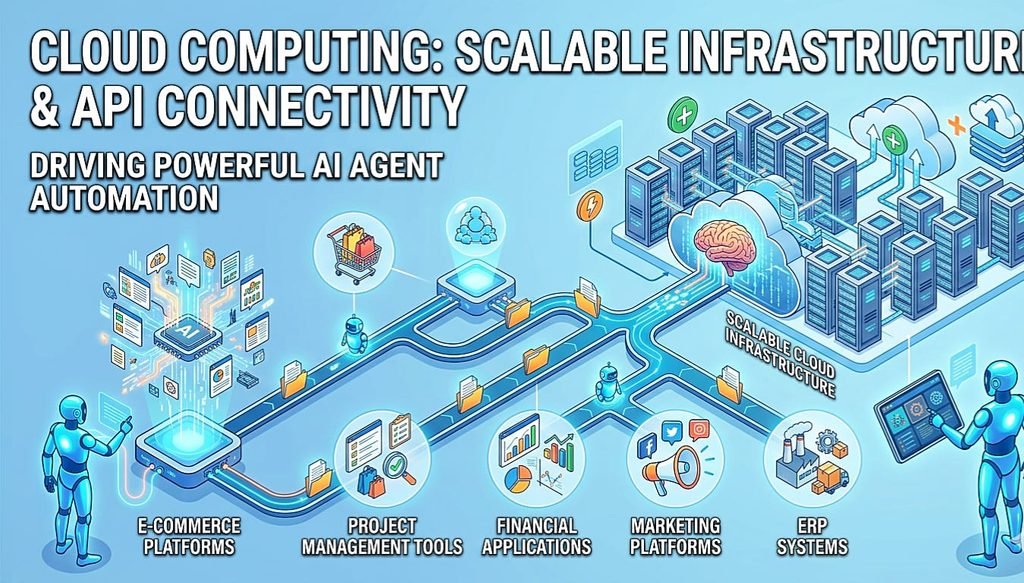
Cloud Computing:
Scalable cloud infrastructure provides the computing power needed for AI agents to process large amounts of information quickly.
Cloud-based APIs also allow AI systems to connect with hundreds of software platforms, making automation much more powerful.
Content Creation
Content creation has evolved dramatically over the past few years. Instead of producing individual pieces of content on demand, Agentic AI can now manage complete content workflows from initial research to publication.
Consider a technology blog that publishes several articles each week. An AI agent can begin by researching trending topics, analyzing competitor content, identifying relevant keywords, creating an editorial calendar, generating article outlines, drafting content, checking grammar, optimizing readability, and preparing social media summaries for distribution.
This workflow allows writers and editors to spend more time refining ideas, verifying information, and adding valuable insights rather than repeating routine tasks.
Robotics
Robotics represents one of the most exciting applications of Agentic AI because it combines digital intelligence with physical action.
Traditional industrial robots generally perform predefined repetitive movements. Agentic AI enables robots to become more adaptable by allowing them to interpret goals, evaluate their surroundings, and modify their actions when conditions change.
For example, a warehouse robot equipped with Agentic AI can recognize blocked pathways, calculate alternative routes, prioritize urgent deliveries, coordinate with other robots, and complete assigned tasks without waiting for direct human instructions.
This flexibility improves productivity while reducing operational downtime.
Future robotic systems are expected to support industries such as healthcare, agriculture, construction, manufacturing, disaster response, and home assistance.
Personal Productivity
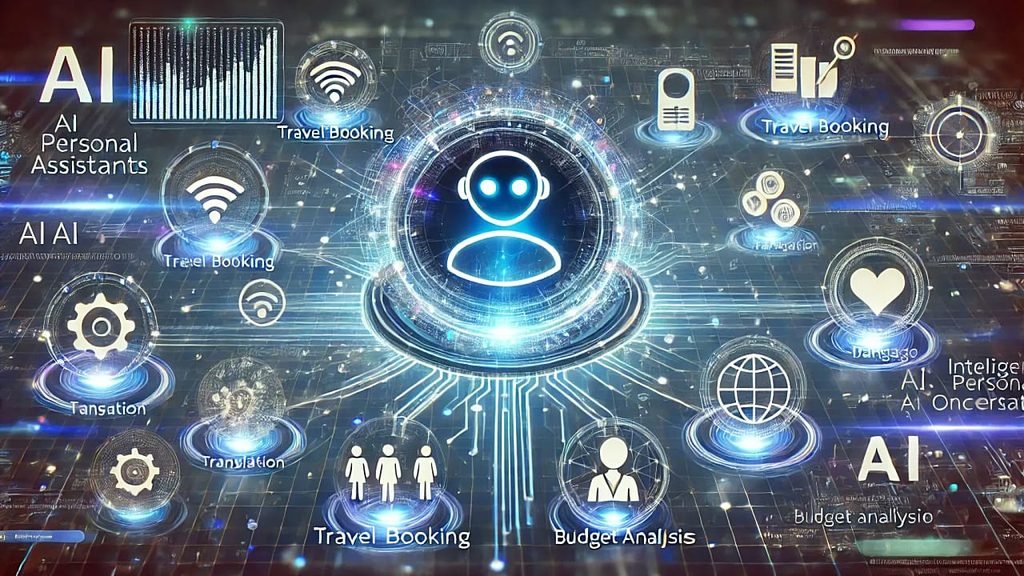
Beyond enterprise applications, Agentic AI is becoming a valuable productivity assistant for individuals.
Rather than acting as a simple chatbot, an AI agent can organize calendars, prioritize daily tasks, summarize lengthy documents, prepare meeting notes, draft emails, coordinate travel plans, manage research projects, and remind users about important deadlines.
For freelancers, entrepreneurs, and remote professionals, these capabilities reduce administrative work while allowing more time for strategic thinking and creative problem-solving.
Key Benefits of Agentic AI
Agentic AI delivers value across industries by combining intelligence with automation. Some of its most significant benefits include:
Automates repetitive tasks and saves
time.
• Improves employee productivity.
• Supports faster and more informed
decision-making.
• Reduces operational costs.
• Scales business processes efficiently.
• Provides personalized customer
experiences.
• Enhances data analysis and reporting.
• Minimizes human errors.
• Increases business agility.
• Encourages innovation by allowing
teams to focus on high-value work.
[…] AI Search […]