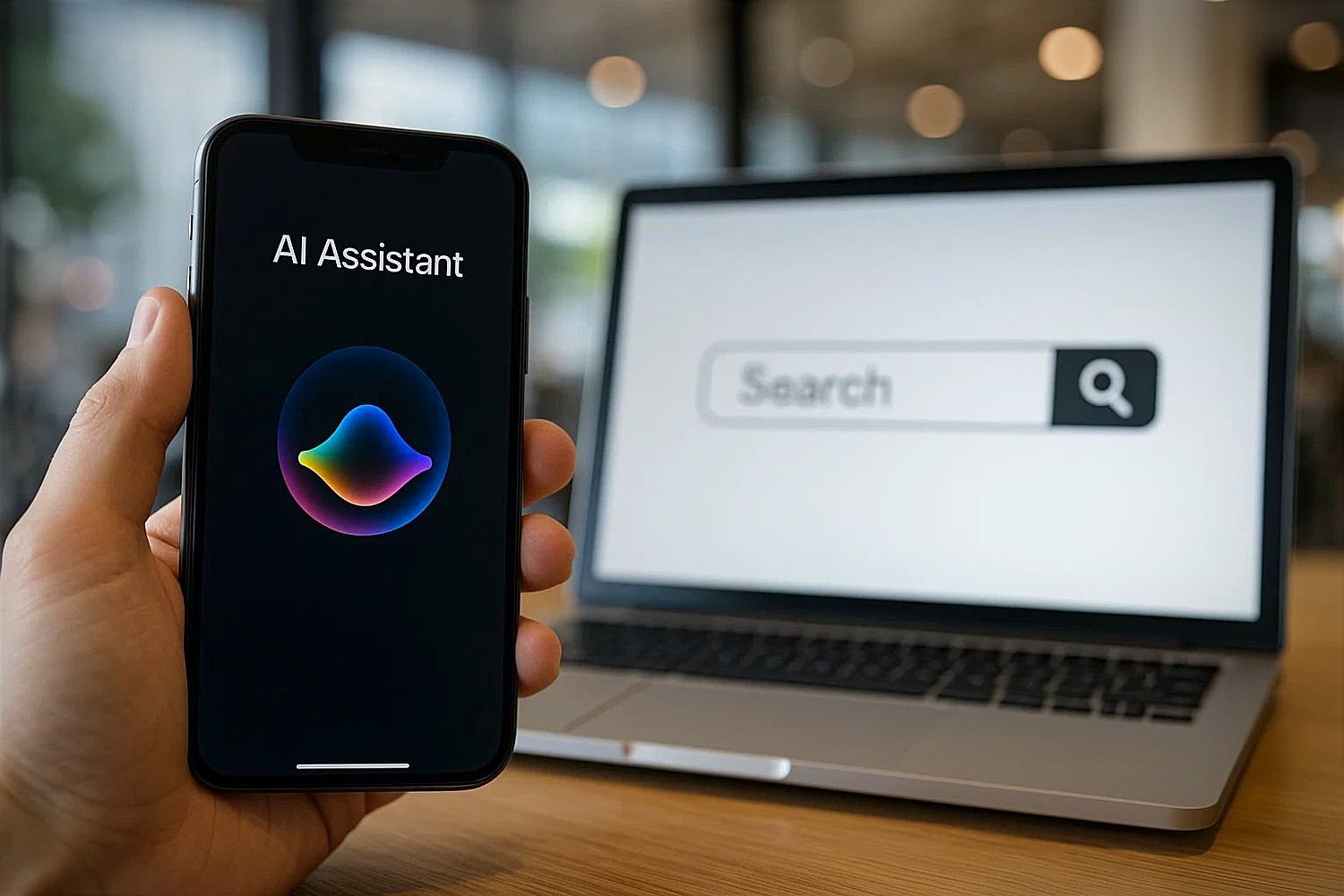
AI Search vs Google Search: Which Search Engine Is Better in 2026?
AI Search vs Google Search
Introduction
The way people search for information is changing faster than ever before.
For more than two decades, Google Search has been the world’s most trusted search engine. Whether someone wanted to find a nearby restaurant, research a medical topic, compare smartphones, or learn a new skill, Google was almost always the first choice.
But in 2026, the search landscape looks very different.
The rise of AI-powered search engines like ChatGPT Search, Perplexity AI, Claude, Microsoft Copilot, and Google AI Mode has completely changed how users discover information online. Instead of clicking through multiple websites to find answers, users can now ask complex questions and receive direct, conversational responses within seconds.
This shift has sparked one of the biggest debates in the digital world:

Is AI Search replacing Google Search, or is Google still the better search engine in 2026?
The answer isn’t as simple as choosing one over the other.
Both AI Search and Google Search have unique strengths, limitations, and ideal use cases. While AI search engines excel at summarizing information and providing personalized answers, Google continues to dominate in areas like real-time information, local searches, shopping, and discovering fresh web content.
Understanding these differences is essential—not just for everyday users but also for businesses, content creators, digital marketers, and SEO professionals. As user behavior evolves, the way websites attract traffic is also changing.
In this comprehensive guide, we’ll compare AI Search and Google Search from every important angle, including:
• How each search engine works
• Accuracy and reliability
• Speed and user experience
• SEO implications
• Privacy and data handling
• Advantages and disadvantages
• Best use cases
• Which search engine is better in 2026
• What the future of search looks like
Whether you’re a casual internet user or someone working in SEO and digital marketing, this guide will help you understand where search technology is heading—and how to stay ahead of the curve.
What Is AI Search?
AI Search is a new generation of search technology that uses artificial intelligence, natural language processing (NLP), and large language models (LLMs) to answer user questions directly instead of simply showing a list of web pages.
Unlike traditional search engines, AI Search focuses on understanding the intent behind a question rather than matching keywords.
For example, imagine you search:
”Which laptop is best for graphic design under $1,500?”
A traditional search engine may display dozens of blog posts, YouTube videos, shopping websites, and review articles.
An AI search engine, on the other hand, analyzes information from multiple trusted sources and provides a summarized answer, often comparing products, explaining pros and cons, and even suggesting the best option based on your specific needs.
This conversational experience makes searching feel more like talking to an expert than browsing a search engine.
How AI Search Works
AI Search combines several advanced technologies to deliver intelligent responses.
1. Natural Language Understanding
Instead of relying only on keywords, AI understands the meaning behind your question.
For example:
Instead of searching:
Best DSLR camera beginners
You can simply ask:
”I’m starting photography and have a budget of $800. Which DSLR camera should I buy?”
The AI understands context, budget, and user intent.

2. Large Language Models (LLMs)
Modern AI search engines are powered by Large Language Models trained on massive amounts of information.
These models can:
• Understand complex questions
• Generate detailed explanations
• Compare products
• Summarize lengthy content
• Explain technical topics in simple
language
• Answer follow-up questions naturally
This creates a much smoother search experience than repeatedly opening multiple web pages.
3. Conversational Search
One of the biggest advantages of AI Search is that conversations don’t end after one question.
For example:
User:
Which programming language should I learn?
AI:
Python is a great choice for beginners.
User:
What if I want to build AI applications?
AI:
Then Python becomes an even better option because of libraries like TensorFlow and PyTorch.
The AI remembers the context, making research much faster.
Popular AI Search Engines in 2026
Several companies are leading the AI Search revolution.
AI Search Tools Best For:
ChatGPT Search: Research, explanations, writing assistance
Google AI Mode: AI-powered web search integrated with Google
Perplexity AI: Source-based research and citations
Microsoft Copilot: Productivity and Microsoft ecosystem
Claude AI: Long-form analysis and reasoning
Gemini: Google ecosystem and multimodal AI
Each platform has its own strengths, but they all share one common goal:
Helping users find answers faster without forcing them to visit multiple websites.
What Is Google Search?
Google Search is the world’s largest search engine, indexing hundreds of billions of web pages and processing billions of searches every day.
Instead of generating answers from AI alone, Google’s traditional search engine crawls, indexes, and ranks web pages based on hundreds of ranking factors.When someone enters a query, Google’s algorithms determine which pages provide the most relevant, trustworthy, and helpful information.

Users then choose which result they want to visit.
This model has powered the internet for over 25 years and remains the foundation of modern SEO.
How Google Search Works
Google Search operates through three primary stages:
1. Crawling
Google’s bots continuously explore websites across the internet, discovering new pages and updates.
2. Indexing
The collected pages are stored in Google’s massive search index.
Only high-quality, crawlable, and valuable pages are indexed for search results.
3. Ranking
When a user performs a search, Google’s algorithms evaluate hundreds of ranking signals, including:
• Content quality
• Relevance
• User intent
• Backlinks
• Page speed
• Mobile friendliness
• HTTPS security
• User experience (Core Web Vitals)
• Freshness of content
• Website authority
The best pages appear at the top of the search results.
Why Google Search Still Dominates
Despite the rapid growth of AI Search, Google remains incredibly powerful for several reasons.
Massive Index of the Web
Google indexes more web pages than any other search engine.
This allows users to discover information that AI tools may not summarize or reference.
Real-Time Information
Google excels at showing:
• Breaking news
• Live sports scores
• Stock market updates
• Weather forecasts
• Flight information
• Local business listings
• Maps and navigation
Freshness is one of Google’s greatest strengths.
Website Discovery
Sometimes users don’t want a summarized answer—they want to explore multiple viewpoints.
Google provides access to:
• Research papers
• Blogs
• Forums
• Government websites
• Educational resources
• Product reviews
• Official documentation
This makes it ideal for deep research and independent decision-making.
AI Search vs Google Search: The Biggest Difference
At first glance, AI Search and Google Search seem to serve the same purpose—helping users find information online.
However, the way they deliver that information is fundamentally different.
Think of it this way:
• Google Search acts like a digital library. It presents a list of relevant web pages and lets you decide which sources to explore.
• AI Search behaves more like a knowledgeable assistant. Instead of handing you a list of links, it reads, analyzes, and summarizes information into a direct answer.
This distinction changes not only how people search but also how businesses, publishers, and SEO professionals approach online visibility.
AI Search vs Google Search: A Detailed Head-to-Head Comparison
Now that we’ve explored how both AI Search and Google Search work, it’s time to compare them across the factors that matter most to today’s users.
While both are designed to help people find information, they do so in very different ways. Depending on what you’re looking for, one may offer a better experience than the other.
Let’s break down the comparison feature by feature.
Features of AI Search and Google Search
1. Search Experience
AI Search: Conversational and interactive
Google Search: Traditional list of search results
2. Answers
AI Search: Direct, summarized responses
Google Search: Multiple website links
3. Follow-up Questions
AI Search: Yes
Google Search: Limited
4. Real-Time Updates
AI Search: Improving, but not always instant
Google Search: Excellent
5. Source Discovery
AI Search: Limited
Google Search: Excellent
6. Local Search
AI Search: Basic
Google Search: Outstanding
7. Shopping Results
AI Search: Limited
Google Search: Comprehensive
8. Research Assistance
AI Search: Excellent
Google Search: Very Good
9. Personalization
AI Search: High
Google Search: Moderate
Traffic Impact
AI Search: Reduces clicks to websites
Google Search: Drives organic website traffic
This comparison provides a quick overview, but each category deserves a closer look.
1. User Experience: Which Search Feels More Natural?
One of the biggest reasons AI Search has gained popularity is its ability to make searching feel like having a conversation rather than typing keywords into a search box.
Instead of opening five or ten websites, users can ask a question in plain English and immediately receive a structured answer.
For example:
”Explain blockchain technology like I’m 12 years old.”
An AI search engine understands the request, simplifies technical terms, and provides an easy-to-read explanation in seconds.
With Google Search, you’ll typically receive blog posts, YouTube videos, Wikipedia pages, and educational websites. While this gives you more options, it also requires extra time to compare sources and find the information you’re looking for.
For users who want quick explanations or simplified answers, AI Search delivers a smoother and more intuitive experience.

2. Accuracy and Reliability
Speed is important, but accuracy matters even more.
A search engine is only useful if the information it provides is trustworthy.
AI Search tools analyze information from multiple sources and generate summarized responses. When connected to the live web, they often provide accurate and up-to-date answers while citing references.
However, AI can still make mistakes. In some cases, it may misunderstand context, oversimplify complex topics, or confidently present incorrect information. This is why users should verify important facts—especially for medical, legal, financial, or scientific subjects.
Google Search
Google doesn’t generate answers in the same way. Instead, it ranks and displays web pages from a wide range of sources.
This gives users the opportunity to compare viewpoints, check official websites, and evaluate the credibility of different publishers.
For high-stakes topics, this flexibility can be a major advantage.
While AI continues to improve rapidly, Google remains more reliable for verifying information and accessing authoritative sources directly.
3. Speed: Which One Saves More Time?
Modern users value convenience.
Nobody enjoys opening multiple tabs just to find one simple answer.
AI Search significantly reduces this effort by delivering concise summaries immediately. Whether you’re researching a topic, comparing products, or asking for step-by-step guidance, AI often provides everything you need in one response.
Google Search, by comparison, usually requires users to browse several websites before finding the best answer.
That said, Google has introduced AI-generated overviews in many regions, making traditional search faster than ever.
For quick learning and everyday questions, AI Search generally offers the faster experience.
4. Research and Learning
When it comes to studying a topic in depth, both platforms have unique strengths.
AI Search excels at:
• Summarizing lengthy articles
• Explaining difficult concepts
• Comparing ideas
• Breaking down complex information
• Answering follow-up questions
This makes it an excellent learning companion.
Google Search, however, gives users direct access to original research papers, academic journals, government publications, expert blogs, and official documentation.
For students, researchers, and professionals who need primary sources, this remains a significant advantage.
If you want quick understanding, AI Search is ideal.
If you need original evidence and in-depth research, Google Search remains the better option.
5. Finding New Websites and Discovering Content
One of Google’s greatest strengths has always been content discovery.
Imagine you’re planning a vacation.
Instead of reading one summarized answer, you might want to compare:
• Travel blogs
• Hotel reviews
• Local guides
• YouTube travel vlogs
• Restaurant recommendations
• Official tourism websites
Google makes discovering diverse perspectives easy.
AI Search, on the other hand, often summarizes information instead of encouraging exploration.
While this saves time, it can also reduce exposure to valuable websites that offer deeper insights.
For discovering new content, businesses, creators, and niche resources, Google continues to lead.
6. Local Search and Maps
Suppose you’re looking for:
• The best coffee shop nearby
• An emergency hospital
• A dentist
• A nearby pharmacy
• Directions to a hotel
Google Search integrates seamlessly with Google Maps, business listings, customer reviews, operating hours, contact information, and navigation.
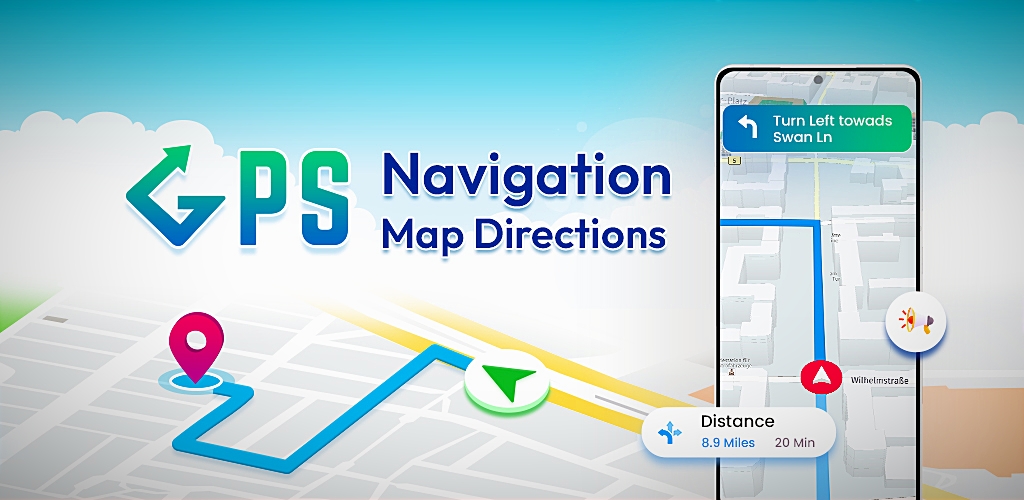
This creates a complete local search experience.
AI Search can recommend places, but it usually depends on available web data and doesn’t yet match Google’s extensive local ecosystem.
When location matters, Google remains unmatched.
7. Shopping and Product Comparisons
Online shopping has become one of the most common reasons people use search engines.
AI Search can explain:
• Product differences
• Buying guides
• Pros and cons
• Best choices for specific needs
However, Google offers much more.
Users can compare:
• Prices
• Reviews
• Seller ratings
• Product availability
• Shopping ads
• Images
• Videos
Everything is available within one ecosystem.
For actual purchasing decisions, Google provides a more complete shopping experience.
8. Privacy and Personalization
Privacy has become a growing concern as AI and search technologies continue to evolve.
AI Search platforms often personalize responses based on conversation history, preferences, and previous interactions. This creates a more tailored experience but also raises questions about how user data is stored and used.
Google also personalizes search results using factors like location, search history, and account activity. However, users generally have more established privacy controls and settings to manage their data.
Regardless of the platform, it’s always a good practice to review privacy settings and understand how your information is handled.

Both AI Search and Google Search continue to improve their privacy features, but users should remain aware of the data they choose to share.
9. SEO and Website Traffic
Perhaps the biggest impact of AI Search is on website owners and digital marketers.
Traditionally, Google Search has been the primary source of organic traffic for millions of websites. Businesses invest in SEO to improve rankings and attract visitors through search results.
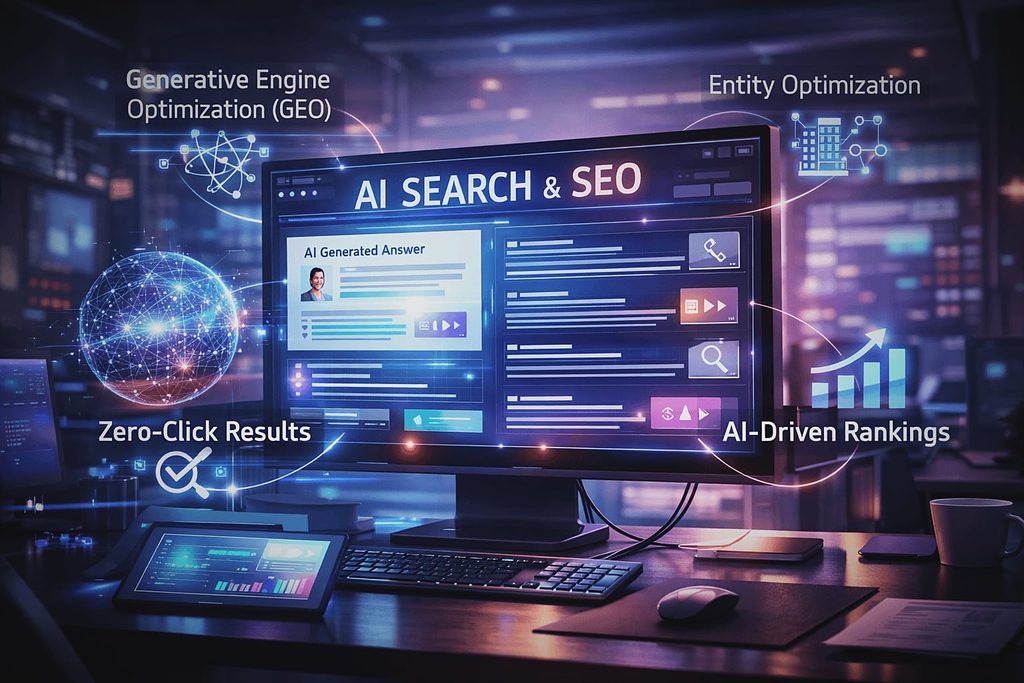
AI Search changes this dynamic.
Because AI often provides direct answers within the search interface, users may no longer need to click through to external websites. This trend, commonly known as zero-click search, is becoming increasingly important.
As a result, publishers and marketers are adapting their strategies by focusing on:
• Original research
• First-hand experience
• Expert insights
• Unique data
• Helpful content that AI cannot easily
replicate
In 2026, successful SEO is no longer just about ranking—it’s about creating content valuable enough to earn trust, citations, and visibility across both traditional search engines and AI-powered platforms.
For driving organic traffic, Google Search still plays the leading role.
For answering user queries quickly, AI Search is changing how people consume information.
So, Which One Is Better So Far?
After comparing the key features, one thing becomes clear: this isn’t a battle with a single winner.
AI Search and Google Search are designed for different user needs.
If you want instant answers, simplified explanations, and an interactive experience, AI Search offers a faster and more conversational approach.
If you need real-time information, trusted sources, local results, shopping options, or want to explore multiple viewpoints, Google Search remains incredibly powerful.
Rather than replacing each other, both technologies are increasingly working side by side—giving users more flexibility than ever before.
Is AI Search Replacing Google Search?
After comparing both technologies feature by feature, one question naturally comes to mind:
Is AI Search actually replacing Google Search, or is it simply changing the way people search online?
The short answer is no—not completely.
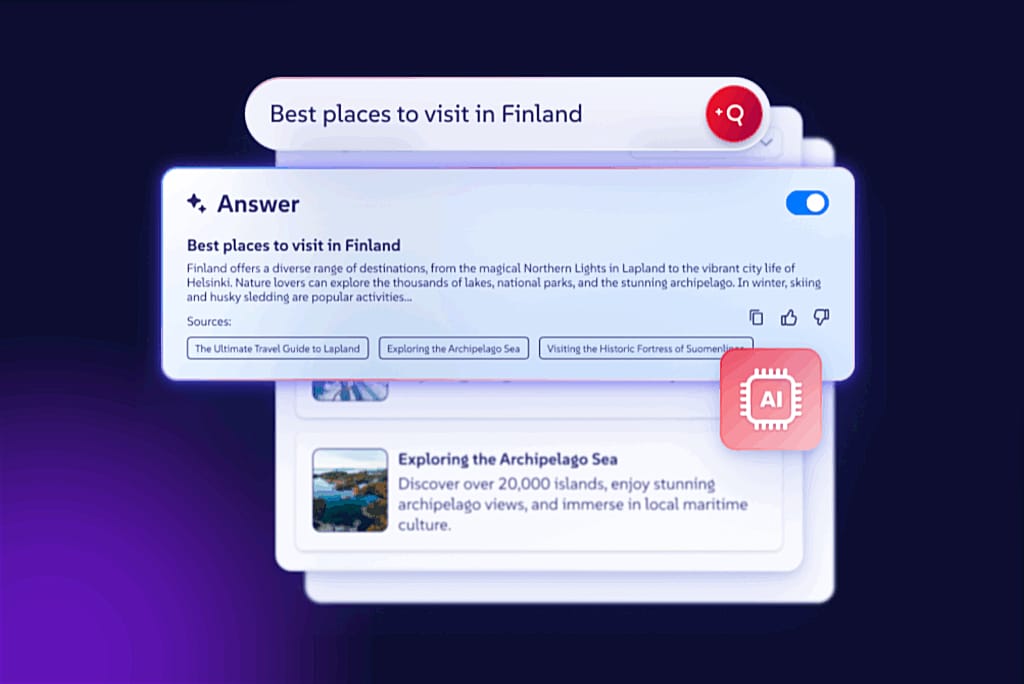
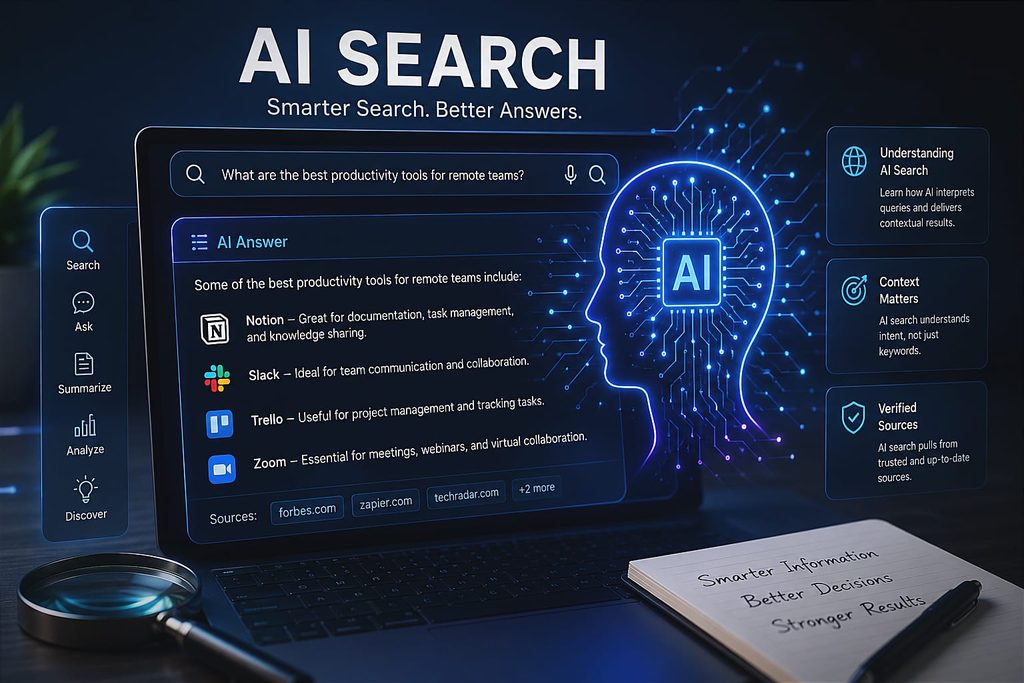
Instead of replacing Google overnight, AI Search is reshaping user behavior and introducing a new way of accessing information. Search is evolving from a link-based experience to an answer-based experience.
This shift doesn’t mean traditional search engines are becoming irrelevant. Rather, it means users now have more choices depending on what they want to accomplish.
Think of it this way:
• If you need a quick explanation, AI
Search is often the fastest option.
• If you want to verify information,
compare multiple sources, or discover
new websites, Google Search still offers
a richer experience.
Rather than competing in separate worlds, the two technologies are beginning to overlap.
In fact, Google itself has embraced artificial intelligence through AI-powered search experiences, proving that the future isn’t AI Search versus Google Search—it’s AI-powered Google Search.
How AI Search Is Changing SEO in 2026
For years, SEO was primarily about helping webpages rank higher on Google.
Today, that strategy is expanding.
Businesses now need to optimize their content not only for search engine rankings but also for AI-generated answers.
This doesn’t mean SEO is disappearing.
It means SEO is evolving.
Here are some of the biggest changes happening in 2026.
1. Helpful Content Matters More Than Ever
Search engines and AI platforms increasingly reward content that demonstrates genuine expertise and helps users solve real problems.
Articles created only to rank for keywords without providing meaningful value are becoming less effective.
Instead, successful content focuses on:
• First-hand experience
• Practical advice
• Original insights
• Clear explanations
• User satisfaction
This aligns closely with Google’s Helpful Content System and E-E-A-T principles (Experience, Expertise, Authoritativeness, and Trustworthiness).
2. Topical Authority Is Becoming More Important
Publishing one great article is no longer enough.
Search engines now evaluate whether a website consistently covers a subject in depth.
For example, if your website focuses on artificial intelligence, publishing interconnected articles about AI tools, machine learning, prompt engineering, AI ethics, and search technology helps establish topical authority.
This increases the likelihood that both Google Search and AI Search systems will recognize your website as a trusted source.
3. Brand Trust Is the New Ranking Signal
As AI-generated answers become more common, recognizable and trustworthy brands gain an advantage.
People are more likely to trust information from websites with a strong reputation, transparent authorship, and consistent publishing standards.
Building a trusted brand now matters just as much as building backlinks.
4. Zero-Click Searches Will Continue to Grow
One of the biggest challenges for publishers is the rise of zero-click searches.
Users increasingly receive answers directly within search results or AI interfaces without visiting the original website.
Although this may reduce clicks for simple informational queries, it also creates opportunities.
Websites that publish original research, exclusive data, expert opinions, case studies, calculators, templates, and interactive resources remain highly valuable because AI systems still rely on high-quality sources to generate reliable responses.

Best Search Engine for Different Types of Users
There is no universal winner because different users have different needs.
Here’s a practical breakdown.
User Type and Better Choice
Students: AI Search + Google Search
Why: Learn concepts quickly, then verify with trusted sources.
Researchers: Google Search
Why: Access academic papers, official publications, and primary references.
Content Writers: AI Search
Why: Brainstorm ideas, summarize topics, and improve productivity.
SEO Professionals: Both
Why: Use AI for research and Google for keyword validation, rankings, and competitive analysis.
Online Shoppers: Google Search
Why: Better price comparisons, reviews, and seller information.
Local Users: Google Search
Why: Superior maps, navigation, business listings, and customer reviews.
Casual Learners: AI Search
Why: Faster explanations and interactive conversations.
The smartest approach in 2026 isn’t choosing one platform over the other—it’s knowing when to use each.
How to Use AI Search and Google Search Together
Instead of treating them as competitors, think of them as complementary tools.
For example:
Use AI Search to:
• Understand new topics quickly
• Generate ideas
• Summarize long articles
• Compare concepts
• Create study notes
• Ask follow-up questions
Use Google Search to:
Verify facts
• Read original sources
• Find breaking news
• Compare multiple opinions
• Discover websites
• Shop online
• Find local businesses
Combining both approaches gives users the best balance of speed, accuracy, and depth.
The Future of Search Beyond 2026
Search technology is still evolving rapidly.
Over the next few years, several trends are likely to shape the future of online search.
More Personalized Results:
Search experiences will become increasingly tailored to individual preferences, previous interactions, and user intent.
Instead of showing identical results to everyone, AI systems will deliver answers that better match each person’s context.
Voice and Multimodal Search:
People are already searching with their voices, uploading images, and even asking questions about videos.
Future search engines will seamlessly combine text, voice, images, and video into a single search experience.
AI Assistants Will Become Everyday Search Companions:
Rather than opening a browser every time they have a question, many users will rely on AI assistants integrated into smartphones, laptops, cars, and wearable devices.
Searching will become more conversational and continuous.
Greater Focus on Trust and Source Transparency:
As AI-generated information becomes more widespread, users will demand greater transparency about where answers come from.
Search platforms that clearly cite authoritative sources and make it easy to verify information are likely to earn higher levels of trust.
Final Verdict: AI Search vs Google Search — Which Search Engine Is Better in 2026?
After examining both platforms from every major perspective, one conclusion stands out:
The best search engine depends on what you’re trying to achieve.
If your priority is:
• Fast answers
• Easy-to-understand explanations
• Interactive conversations
• Productivity
then AI Search is an excellent choice.
If you need:
• Real-time information
• Original sources
• Local businesses
• Shopping comparisons
• Independent research
then Google Search continues to be the stronger option.
The reality is that modern internet users don’t have to choose only one.
The most effective strategy in 2026 is using AI Search for understanding and Google Search for verification and discovery.
Together, they create a faster, smarter, and more reliable search experience than either platform can provide alone.
Is AI Search more accurate than Google Search?
AI Search is excellent at summarizing information and explaining complex topics, but Google Search remains more reliable for verifying facts through original and authoritative sources.
Will AI Search replace Google Search completely?
No. AI Search is transforming how people access information, but Google Search continues to lead in areas such as local search, shopping, real-time updates, and website discovery.
Which search engine is better for students?
Students benefit most from using both. AI Search helps explain concepts quickly, while Google Search provides access to textbooks, academic papers, and trusted educational resources.
Does AI Search affect SEO?
Yes. AI-powered search is increasing zero-click searches and encouraging website owners to create more original, experience-based, and trustworthy content that stands out.
Which search engine is better for shopping?
Google Search remains the better option because it offers product comparisons, prices, customer reviews, seller information, and shopping-specific search features.
Should businesses optimize for AI Search as well as Google Search?
Absolutely. Businesses should continue following SEO best practices while also creating high-quality, structured, and authoritative content that AI systems can understand and reference.
What is the biggest advantage of AI Search?
Its greatest strength is delivering direct, conversational answers that save users time and reduce the need to visit multiple websites.
Can AI Search and Google Search work together?
Yes. AI Search is ideal for learning and summarizing information, while Google Search is better for validating facts, discovering sources, and accessing fresh content.